


Business Valuations and Financing
How the Feds’ Third-Straight Interest Rate Cut is Impacting Business Valuations
In December 2025, the Federal Reserve announced a quarter-point interest rate cut, marking the third-straight reduction this year. This move brings the Fed’s benchmark rate to 3.5%-3.75%, lowering borrowing costs across the economy.
The cut followed signs of a cooling labor market and a more cautious economic outlook highlighted in the Fed’s November Beige Book. While economic activity continues at a moderate pace, job growth has slowed and unemployment has edged slightly higher. Inflation, however, remains on the Fed’s radar.
For business owners and buyers, this policy shift has immediate, favorable implications.
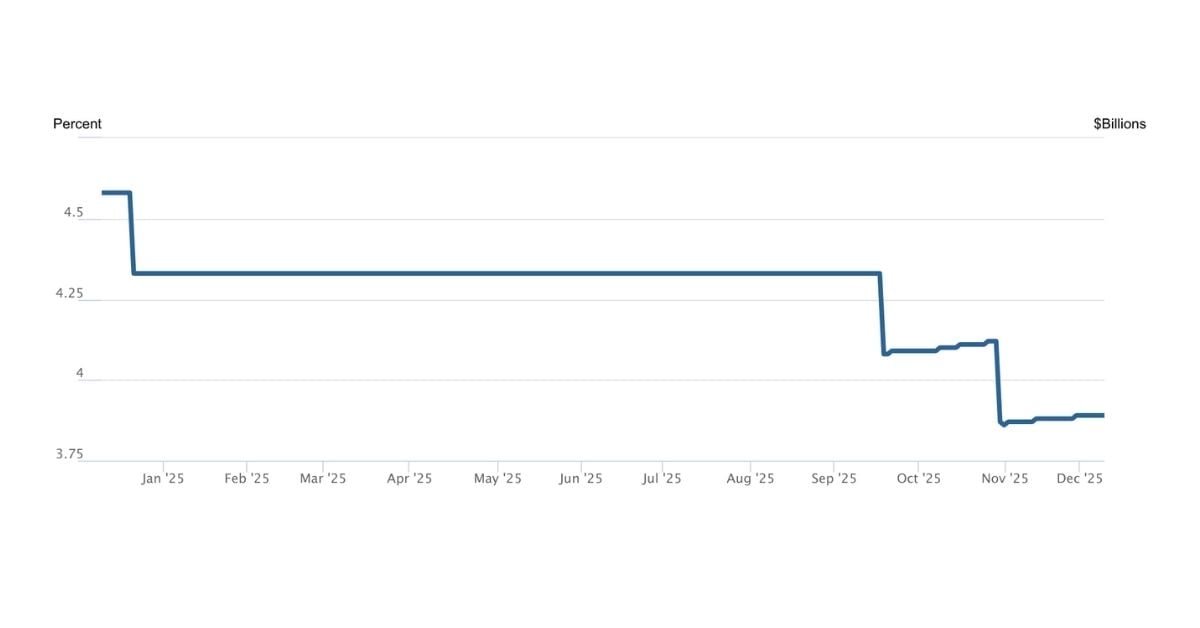
SOURCE: Federal Reserve
Understanding the Direct Impact on Business Valuations
Lower interest rates support stronger business valuations through two key channels: Reduced Cost of Financing and the Discounted Cash Flow (DCF) Method.
1. Cheaper Financing Fuels Buyer Activity
For Buyers: Lower rates reduce the cost of capital for acquisition financing, including SBA loans, commercial mortgages, and lines of credit. A decrease in the monthly debt service for the same loan amount significantly improves a buyer’s effective return on investment. This makes the prospect of buying a business more financially attractive and increases the pool of qualified buyers in the market, driving competition.
For Sellers: An increase in buyer demand and purchasing power naturally puts upward pressure on sale prices and can lead to faster deal cycles.
For example, a slight reduction in the interest rate on a 10-year term loan for an acquisition could save a buyer tens of thousands of dollars in interest over the life of the loan, making the purchase more profitable.
2. The Role of the Discount Rate in Valuation
One of the most precise ways professional valuations are impacted is through the Discounted Cash Flow (DCF) method.
In the DCF model, a business’s value is the present value of its future expected cash flows. To calculate this “present value,” we use a discount rate, which is based on the company’s risk and the prevailing cost of capital—which is heavily influenced by the Fed’s rates.
When interest rates fall, the discount rate also tends to fall. A lower discount rate means that future earnings are worth more today, directly increasing the computed present value, and therefore, the valuation of the business. This technical relationship is a crucial driver behind the correlation between low interest rates and high M&A multiples.
Strategic Opportunities for Business Owners
For Prospective Sellers: Maximize Your Timing
The current environment signals a potential “window of opportunity” for sellers. With lower borrowing costs increasing buyer confidence and valuation multiples, now may be the optimal time to capitalize on peak pricing. Sellers should:
- Refinance Existing Debt: Take advantage of lower rates to improve your business’s cash flow and reduce its debt burden before selling, which makes your company look stronger to buyers.
- Accelerate Growth Investments: Use cheaper capital to fund strategic expansion, equipment upgrades, or inventory purchases, boosting your key performance indicators (KPIs) and proving strong growth potential right before listing.
For Prospective Buyers: Lock in Favorable Financing
While valuations may be trending upward, buyers can secure a long-term advantage by locking in current low fixed interest rates on acquisition financing. This mitigates the risk of future rate hikes and ensures a lower cost of ownership for years to come.
- Review Variable vs. Fixed-Rate Loans: Assess the trade-off. While variable rates may fall further, locking in a low fixed rate protects against future volatility.
- Be Ready to Move Quickly: Increased competition means qualified buyers with pre-approved financing and clear intentions will be positioned to win the best deals.
The Sunbelt Advantage: Navigating Volatility
At the same time, it’s important to stay mindful of inflation risks and potential future rate shifts, which could create market volatility over the longer term. The market is constantly adjusting, and a quarter-point shift today does not guarantee the same landscape six months from now.
At Sunbelt Business Brokers, we stay on top of these economic trends and their direct impact on the M&A market. Our experienced brokers understand how to leverage current market dynamics to present your business in the best light for sellers and structure a strong, profitable deal for buyers.
Reach out to your local Sunbelt Business Brokers office today to learn how the current interest rate environment could specifically impact your business valuation and exit strategy.